
Affiliate Disclosure:
At Level2Expert.com, we provide independent research. If you purchase through our links, we may earn a commission at no extra cost to you.
If you’ve just brought home your first EV, you’ve likely been told that a NEMA 14-50 «dryer» outlet is all you need for home charging. It’s a common shortcut, but in the world of high-voltage electronics, shortcuts can be expensive—or even dangerous.
The Continuous Load Challenge: Why It’s Not a Dryer
Most people compare an EV charger to a clothes dryer because they use the same 240V plug. But there is a massive difference in how they use electricity. A dryer runs for 45 minutes and cycles its heating element on and off. An EV charger is a «Continuous Load.»
The Science of Heat: P = I²R
In electrical engineering, heat (P) increases with the square of the current (I). While a toaster or dryer won’t stress a standard $15 outlet, an EV pulling 40 Amps for 10 hours straight creates a relentless thermal stress test.
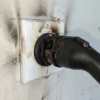
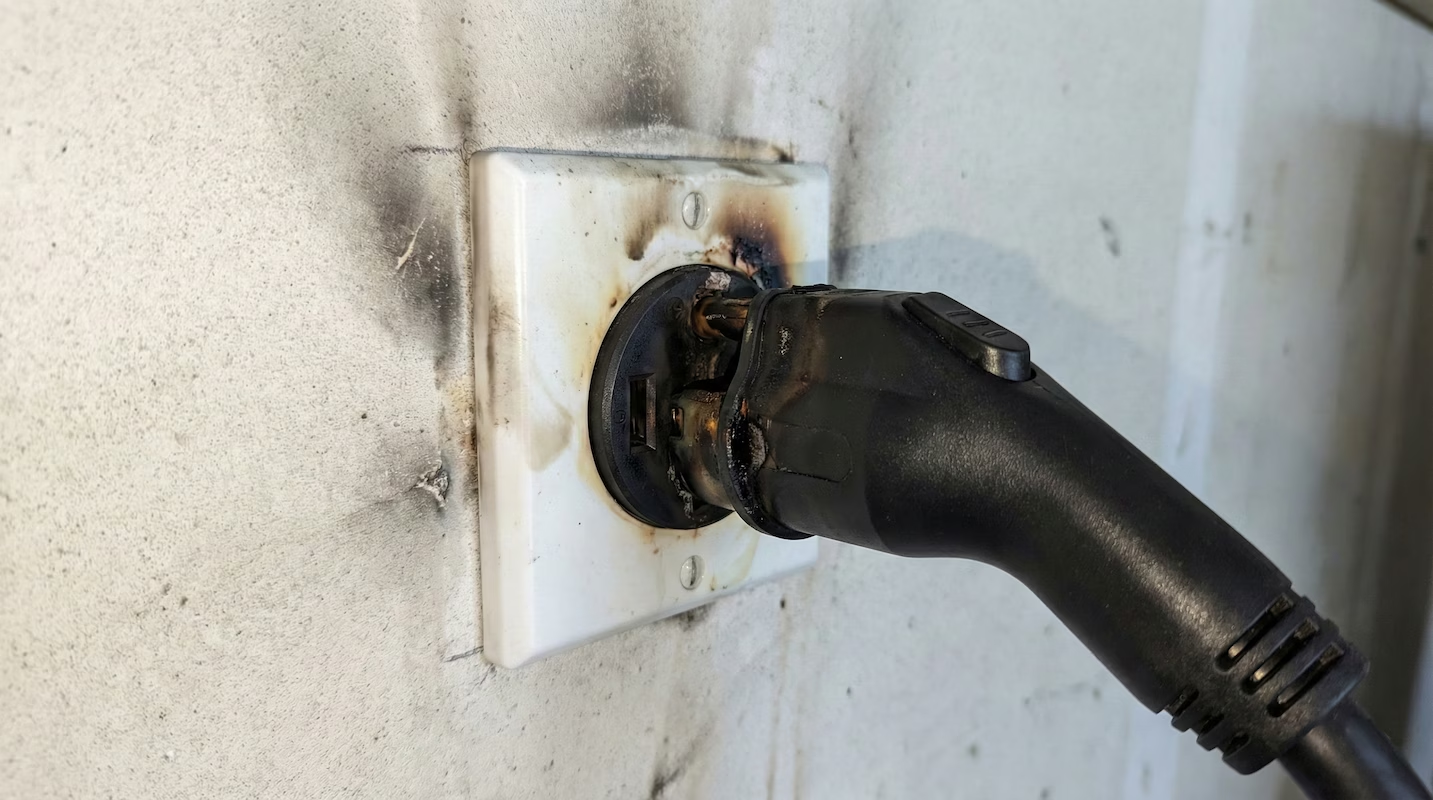
Daily heat expansion and cooling contraction can cause standard residential-grade outlets to fatigue. Over time, the metal «grips» inside the outlet loosen, resistance goes up, and the plastic begins to melt. This is why Level 2 Expert always recommends hardwiring for long-term safety.
The «Budget Outlet» Trap
If you must use a plug-in setup, you cannot use a $15 «builder-grade» receptacle from a big-box store.
- Residential Grade: Designed for devices that are rarely unplugged and run intermittently. They often fail under the 8–12 hour daily grind of EV charging.
- Industrial Grade: Units like the Hubbell HBL9450A or Bryant 9450FR (costing $70–$120) use heavy-duty brass and reinforced polymers. They are built for this heat, but they significantly increase your «budget» install cost.
The GFCI Headache: Why Your Charger «Trips» in the Middle of the Night
If you choose a plug-in charger, the National Electrical Code (NEC 625.54) mandates a GFCI circuit breaker in your main panel. On paper, it sounds safe. In reality, it’s a constant source of frustration.
The «Double Protection» Conflict
Most high-quality EV chargers have built-in safety monitoring. When you plug them into a GFCI breaker, the two systems often «fight» each other. This results in nuisance tripping—your breaker flips for no reason, and you wake up to an uncharged car.
The Expert Fix: Hardwired units usually bypass this requirement, allowing for a standard breaker and 100% reliable charging every night.
The #6 AWG Romex Myth
Speed is king, and everyone wants the maximum 48-Amp charge. But here is where many «cheap» electricians make a dangerous mistake. They often pull standard #6 NM-B (Romex) cable through your walls.
| Wire Type | Max Continuous Amps | Safe for 48A Charging? |
|---|---|---|
| #6 NM-B (Romex) | 44A (Per NEC 334.80) | NO (Risk of Overheat) |
| #6 THHN (In Conduit) | 48A — 60A | YES (The Gold Standard) |
To get the full 11.5 kW (48 Amps) from your Level 2 station, you must use THHN conductors inside a conduit. It’s more labor-intensive, but it’s the only way to future-proof your home for larger EVs like the Ford F-150 Lightning.
The «Hidden» Economy of Hardwiring
People think a plug is cheaper. Let’s do the math on a safe, code-compliant installation:
- Standard 60A Breaker: $20
- GFCI 50A Breaker (Required for plug): $150+
- Industrial Hubbell Outlet: $100
- Total Potential Savings by Hardwiring: $230+
Security and Reliability: The Connections Matter
In electrical engineering, every connection is a potential point of failure. When you use a plug-in charger, you are adding multiple «mechanical breaks» to the circuit.
Breaker → Wire → Receptacle Terminals → Outlet Contacts → Plug Blades → EVSE Internals.
Breaker → Wire → EVSE Lugs. That’s it.
The Theft Factor
EV chargers are high-ticket items. A plug-in station can be stolen in under 10 seconds—it’s as easy as unplugging a toaster. If your charger is mounted in a carport or an accessible driveway, hardwiring is a mandatory security feature. It requires tools and power disconnection to remove, making it a much less attractive target for thieves.
Pro Tip: Torque to Spec (NEC 110.14)
Did you know most EV-related fires are caused by loose connections? NEC 110.14(D) requires electricians to use a calibrated torque screwdriver. If your installer doesn’t reach for a torque tool, they aren’t finishing the job to code.
Final Verdict: Which One Should You Choose?
The decision matrix is simpler than you think. At Level2Expert.com, we break it down by your living situation:
For Homeowners
Hardwire it. You unlock faster speeds (48A), eliminate the «GFCI Tax» on expensive breakers, and add permanent value to your property.
Winner: Hardwired
For Renters
Go with the Plug. Portability is your priority. You can take your charger with you when you move. Just ensure you use an industrial-grade outlet for safety.
Winner: Plug-In (NEMA 14-50)
Future-Proofing Your Garage
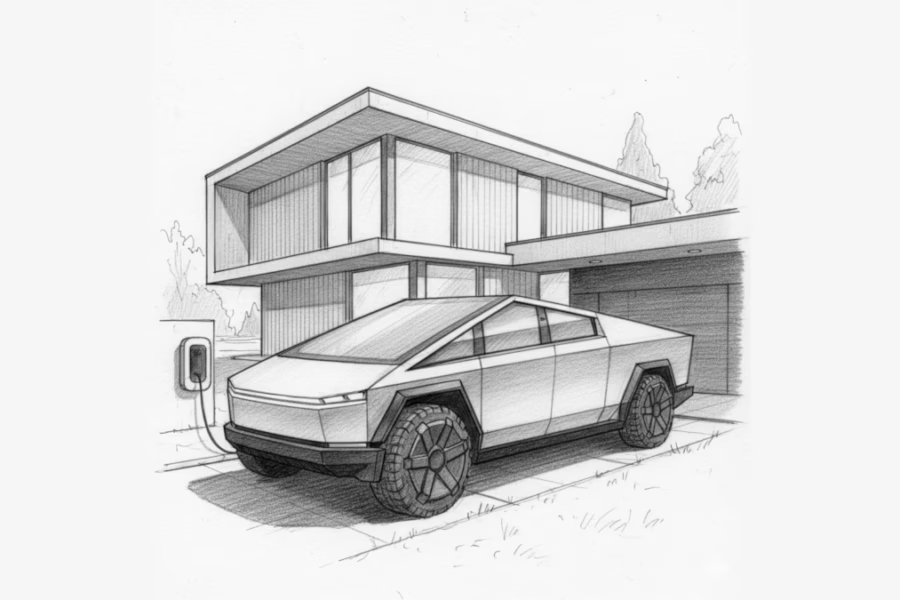
The EV landscape is moving fast. Even if you drive a small sedan today, you might have a Tesla Cybertruck or a Ford Lightning tomorrow. By running a 1-inch conduit and hardwiring your station now, you ensure your home is ready for whatever the future of electrification brings.
Expert Q&A: Technical & Safety Deep Dive
Q: Why do I need a 60A breaker for a 48A charger?
EV charging is a continuous load. Per the NEC «80% Rule,» a circuit breaker must be rated for 125% of the load. For 48A charging, you need a 60A breaker (48 x 1.25 = 60). Running 48A on a 50A breaker will cause it to overheat and trip.
Q: Is #6 AWG Romex (NM-B) safe for a 48A continuous load?
No. Per NEC 334.80, #6 Romex is only rated for 55A. For 48A speeds, you must use #6 THHN conductors in conduit, which can safely handle the heat of a 60A circuit.
Q: Will my Homeowners Insurance cover a fire caused by a DIY installation?
In most U.S. states, insurance providers require electrical work to be performed by a licensed professional. If a fire is traced to an EVSE installed without a permit or by an unlicensed individual, your claim could be denied. Hardwired installations involve an inspection process that verifies code compliance.
Q: Is it safe to charge outdoors in the rain or around children?
Yes. EVSE units use a communication protocol that keeps the plug «cold» until it is connected to the vehicle. For outdoor setups, hardwiring is superior to plug-in options as it provides a liquid-tight, weather-sealed connection (NEMA 3R/4 rating).
Q: Why does my electrician need a torque screwdriver?
NEC 110.14(D) mandates the use of a calibrated torque tool. Loose connections are the leading cause of arcing and melted terminals. Hand-tightening is not sufficient for high-amperage continuous loads.
Ready to Upgrade Your Home Charging?
Check out our vetted list of the top-rated Level 2 Home Stations available on Amazon.
Fast Shipping via Amazon Prime | Expert-Vetted Selections | Top-Rated Safety